

Top Plastic Containers Manufacturer Expands Customized Packaging Solutions for Global Markets
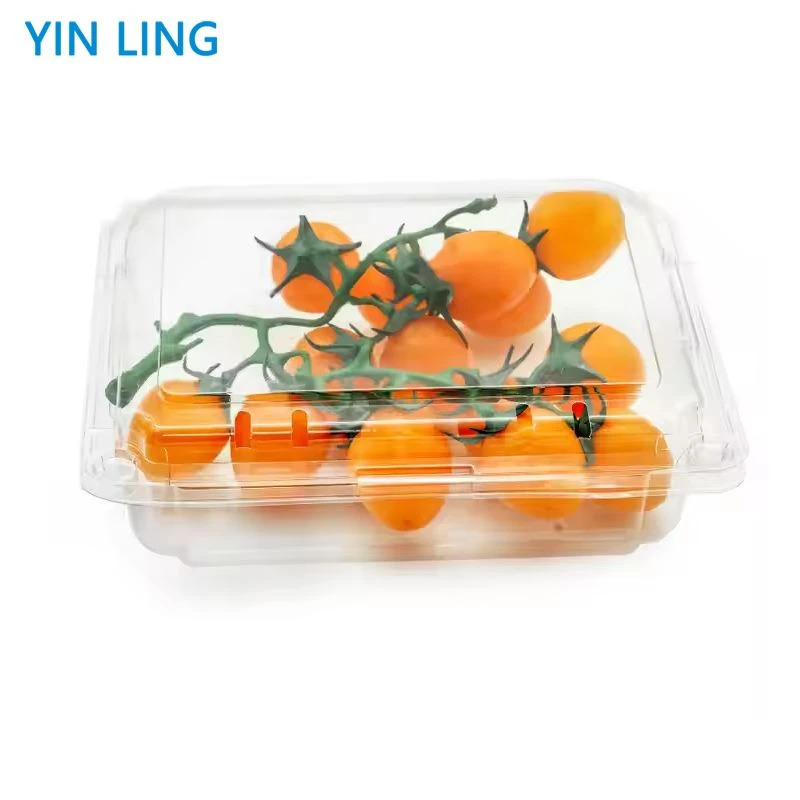
Plastic Container
ANQING, ANHUI, CHINA, October 9, 2026 /EINPresswire.com/ --
As food retail, takeaway services, fresh produce distribution, and consumer goods businesses continue to evolve, plastic packaging remains an important part of modern product protection and presentation. Anhui Yinling Plastic Industry Co., Ltd. provides plastic packaging products for commercial customers seeking practical solutions for storage, transport, display, and daily use. Based in Tongcheng, Anhui Province, China, the company focuses on the development and production of plastic containers, food trays, plastic bags, and related packaging products. Its product portfolio includes Disposable Plastic Tray and Plastic Bags, serving different packaging requirements across food retail, food processing, supermarkets, catering, and other consumer-facing industries. By combining a broad product range with customized packaging services, the company aims to support buyers looking for packaging formats aligned with their operational and branding needs.
Meeting the Changing Needs of the Plastic Packaging Market
Plastic containers and flexible packaging materials play distinct but complementary roles across the supply chain. Rigid containers and trays can help organize products, protect their shape, and improve shelf presentation, while flexible bags provide convenient ways to package, carry, separate, and dispose of a wide range of goods. Businesses select packaging according to product characteristics, handling conditions, shelf-life requirements, cost targets, and applicable regulations.
For fresh food retailers, packaging must balance visibility, protection, and ease of handling. Fruit and vegetable trays can help separate individual items and organize products for display, while food containers provide a more enclosed format for prepared meals, salads, and other packaged foods. Plastic bags are used in supermarkets, takeaway services, food processing operations, and general retail, with different materials and thicknesses suited to different applications.
Anhui Yinling Plastic Industry Co., Ltd. lists plastic containers, disposable plastic trays, and plastic bags among its principal product categories. The company's online catalog includes food containers, fruit and vegetable containers, trays for different food products, food-grade plastic bags, shopping bags, and garbage bags. This range allows business buyers to explore several packaging formats through one supplier and assess which products are appropriate for their own operations.
Packaging decisions require careful attention to the properties of the packaged product. Food may require packaging with suitable moisture resistance, structural support, or protection against contamination during handling. Retail goods may need bags with appropriate dimensions and load-bearing performance. For each application, buyers should verify the material composition, product dimensions, thickness, intended temperature range, and any relevant food-contact requirements before placing an order.
Disposable Plastic Tray Solutions for Food and Retail Applications
Disposable Plastic Tray products are widely used to package, organize, and display items in supermarkets, food processing facilities, bakeries, and takeaway businesses. Depending on their design, trays can help maintain separation between products, support convenient portioning, and create a consistent appearance across retail shelves. Transparent trays can also make the packaged product more visible to customers.
Anhui Yinling Plastic Industry Co., Ltd. offers disposable trays for several applications, including fruit, vegetables, and food products. Its product categories include disposable fruit plastic trays, disposable vegetable plastic trays, disposable food plastic trays, and modified-atmosphere packaging trays. These formats address different packaging requirements, from displaying fresh produce to supporting the handling and presentation of prepared food.
Tray design is an important part of packaging performance. Dimensions should match the size and quantity of the product, while the structure must provide suitable support during filling, stacking, transportation, and display. Rim design, compartment layout, wall thickness, and compatibility with lids or wrapping materials may also influence the performance of a tray within a particular packaging system.
Material selection is equally important. PET and PP are commonly used in plastic packaging, but their properties and appropriate uses differ. PET is often selected where transparency and display are priorities, while PP may be suitable for applications requiring particular heat resistance or flexibility within the limits of the selected grade. Neither material should be assumed to be suitable for every food, temperature, or processing condition. Buyers should confirm the actual material grade and permitted uses for each product.
For fresh produce businesses, packaging can help organize items and reduce direct handling during distribution and display. A properly selected tray may support orderly arrangement, but it does not independently guarantee freshness or extend shelf life. Results depend on the food itself, storage temperature, humidity, packaging design, and the overall supply chain.
Food processors and retail brands may also require customized dimensions, colors, structural designs, and printed packaging. Anhui Yinling Plastic Industry Co., Ltd. describes customized packaging services that include product design, structural development, mold development, and mass production. Buyers considering a tailored tray should provide the intended product dimensions, weight, packaging method, stacking requirements, and expected storage conditions so the design can be assessed against practical operating needs.
Plastic Bags for Flexible Packaging Requirements
Plastic Bags remain a versatile packaging format because they can accommodate a wide range of products and are available in different dimensions, thicknesses, closure formats, and material combinations. They are used in supermarket produce departments, retail checkout areas, takeaway services, food processing, household cleaning, and general packaging applications.
Anhui Yinling Plastic Industry Co., Ltd. lists food plastic bags, shopping plastic bags, and trash plastic bags among its product categories. The company also presents shopping bags described as photodegradable and other environmentally oriented packaging options. For buyers, the important step is to identify the intended application and confirm the product's composition, performance characteristics, and disposal requirements rather than relying on broad environmental descriptions alone.
For food-related applications, bags must be appropriate for the specific food-contact conditions. The required material, thickness, sealing method, and barrier properties may differ depending on whether a bag is used for fresh produce, dry goods, chilled items, or other products. Buyers should request relevant food-contact documentation and verify compliance with the regulations of the destination market.
Shopping bags, meanwhile, are evaluated according to carrying capacity, handle strength, dimensions, print quality, and resistance to tearing during normal use. Bags used for waste collection have different priorities, including volume, puncture resistance, closure options, and suitability for the intended type of waste. Choosing a product based on its actual purpose can help businesses avoid unnecessary costs and performance problems.
Customization provides another consideration for commercial customers. Businesses may require specific sizes, thicknesses, colors, logo printing, or packaging quantities to align with their retail operations. Anhui Yinling Plastic Industry Co., Ltd. states that it offers customization options across its packaging products, including material selection, specifications, and printing. Such arrangements should be confirmed product by product, with agreed drawings, samples, and performance requirements documented before mass production.
Manufacturing Capacity and Production Coordination
Packaging production often involves multiple processes, including material preparation, film blowing, cutting, bag making, printing, and thermoforming. The exact manufacturing route depends on whether the final product is a flexible bag, a rigid container, or a formed tray. Coordination across these stages can affect dimensions, surface quality, printing consistency, and production efficiency.
According to its company website, Anhui Yinling Plastic Industry Co., Ltd. has more than 300 sets of production equipment and over 100 production lines, including film-blowing machines, cutting machines, blister-forming equipment, and printing machinery. The company also describes its activities as covering research and development, design, production, and sales. This reported equipment base provides context for buyers assessing the supplier's stated manufacturing resources, although specific capacity and lead times should be confirmed for each product and order.
For packaging buyers, manufacturing capability should be evaluated alongside quality assurance. A stable production process requires defined material specifications, suitable equipment settings, inspection procedures, and clear acceptance criteria. For trays, quality checks may cover dimensions, forming quality, wall thickness, surface condition, and structural performance. For bags, relevant checks can include dimensions, thickness, seal integrity, printing accuracy, and resistance to tearing or leakage where applicable.
Batch consistency is particularly important for retailers and food processors that depend on standardized packaging. Significant variations in size or structure can complicate automated filling, sealing, stacking, and storage. Clear specifications and sample approval can help align expectations between the supplier and customer before large orders are produced.
The company also describes OEM and ODM services for customized packaging projects. These services may be relevant to brands that require a distinctive packaging structure or printed design. Buyers should clarify development costs, mold ownership, minimum order quantities, sample approval procedures, production timelines, and responsibilities for any changes to the approved design.
Quality Management and Food-Contact Considerations
Plastic packaging intended for food applications must be selected with particular care. The suitability of a material depends on its composition, the food type, contact duration, temperature, and applicable regulatory requirements. A general statement that a product is food-grade does not replace the need to confirm the documentation and conditions relevant to the exact packaging item.
Anhui Yinling Plastic Industry Co., Ltd. describes a quality-control approach covering raw materials, production, and finished products. Its company information also states that it has obtained ISO quality management system certification and developed a quality-control process intended to support product consistency. Buyers should request current certificates and relevant technical documents when evaluating a potential supply agreement.
Depending on the product and destination market, buyers may need material declarations, food-contact compliance documents, test reports, or other supporting records. Where packaging is intended for chilled or heated applications, the permitted temperature range should be confirmed. Packaging designed for ordinary room-temperature use should not automatically be treated as suitable for microwave heating, hot filling, or freezer storage.
Inspection before shipment can also help confirm that the supplied products match the approved sample and purchase specification. Buyers may define acceptable limits for dimensions, color, printing, packaging quantities, and visible defects. For customized products, a documented approval process can reduce the risk of differences between the sample and the final production batch.
Environmental Considerations and Packaging Development
Environmental impact has become an important issue in packaging procurement. Businesses are evaluating ways to reduce unnecessary material use, improve packaging efficiency, and comply with changing regulations on single-use plastics and waste management. The appropriate solution depends on the application, available collection systems, material composition, and local infrastructure.
Anhui Yinling Plastic Industry Co., Ltd. presents environmentally oriented packaging options within its product portfolio, including bags described as biodegradable or photodegradable. Buyers should carefully distinguish between these terms. Photodegradable materials are designed to change or break down under particular light conditions, while biodegradable materials depend on the relevant degradation mechanism and environmental conditions. Neither label alone establishes that a product will fully degrade in every disposal environment.
Businesses considering such products should request evidence supporting the stated environmental characteristics, including relevant test methods, conditions, timeframes, and certifications where applicable. They should also check local rules governing environmental claims and packaging disposal. Clear information helps brands communicate accurately with customers and avoid unsupported sustainability claims.
Material reduction can be another practical route to improving packaging efficiency. Packaging that uses less material while still meeting strength and protection requirements may reduce resource consumption and transport weight. However, reducing thickness without adequate testing can compromise performance and lead to damage or waste elsewhere in the supply chain. Any design change should therefore be evaluated through sample testing and operational trials.
Supporting International Buyers and Customized Orders
International packaging procurement involves coordination across product development, production, inspection, documentation, and shipping. Buyers need to understand not only the quoted unit price but also the minimum order quantity, packaging configuration, tooling costs, production lead time, and freight implications. These factors are particularly important for custom trays and printed plastic bags.
Anhui Yinling Plastic Industry Co., Ltd. states that it serves different commercial sectors and provides customized packaging services. Its product categories cover applications in fresh produce retail, food services, food processing, supermarkets, cake shops, and other packaging markets. For international buyers, this broad range offers a starting point for evaluating whether the supplier can support several packaging requirements within a coordinated purchasing process.
Before placing an order, buyers should provide a clear description of the product to be packaged, its dimensions and weight, the intended use environment, and the required quantity. For trays, information about stacking, lids, filling equipment, and display conditions can help determine a suitable design. For bags, buyers should clarify dimensions, thickness, handle or closure design, printing requirements, and expected load.
Samples and technical discussions can help identify potential problems before mass production. Buyers may assess tray rigidity, transparency, stacking performance, or bag strength, while also checking whether the packaging works with their existing equipment. A final specification should record the approved materials, dimensions, tolerances, printing details, and relevant quality requirements.
Reliable communication remains important throughout the order cycle. Production updates, inspection arrangements, packing details, and shipping documentation should be agreed in advance. Buyers should also establish how product complaints, damaged shipments, or specification deviations will be handled. Such planning helps make purchasing more predictable and supports long-term supplier relationships.
Looking Ahead for the Plastic Containers Industry
Plastic packaging continues to serve a wide range of industries because it can be adapted to different product shapes, storage needs, and distribution channels. At the same time, packaging buyers face growing expectations around product safety, material efficiency, customization, and responsible environmental communication.
For businesses evaluating a Top Plastic Containers manufacturer, the most useful criteria include product suitability, manufacturing capability, quality management, documentation, and responsiveness to customer requirements. A broad catalog can be valuable, but each product should be assessed according to its intended use, technical specifications, and regulatory obligations.
Anhui Yinling Plastic Industry Co., Ltd. presents a product portfolio spanning rigid packaging, Disposable Plastic Tray products, and Plastic Bags. This range may help retailers, food processors, and distributors explore different packaging formats through one supplier. Successful procurement, however, depends on confirming the details of each product, testing its suitability where necessary, and establishing clear expectations for quality and delivery.
As packaging requirements continue to evolve, manufacturers that combine practical design, consistent production, and transparent technical communication can help customers make informed sourcing decisions. For buyers seeking plastic packaging for food, retail, and everyday applications, reviewing product specifications and discussing customization requirements directly with the supplier remain essential steps in selecting a suitable solution.
About Anhui Yinling Plastic Industry Co., Ltd.
Anhui Yinling Plastic Industry Co., Ltd. is a plastic packaging manufacturer based in Tongcheng, Anhui Province, China. Established in 2012 according to its company profile, the business integrates research and development, design, production, and sales. Its product range includes plastic containers, food trays, Disposable Plastic Tray products, food-grade Plastic Bags, shopping bags, garbage bags, and other packaging items. The company reports operating a range of film-blowing, cutting, forming, and printing equipment and offers customized packaging services for business customers. Its products are intended for applications including fresh produce retail, food processing, supermarkets, food services, and general packaging. Buyers interested in product specifications, customized designs, material options, and order requirements can find further information through [www.yinlingplastics.com].
Address: Anhui Yinling Plastic Industry Co., Ltd., Shuangxin Industrial Park, Tongcheng Economic Development Zone, Anqing City, Anhui Province
Official Website: https://www.yinlingplastics.com/
Yu
Anhui Yinling Plastic Industry Co., Ltd.
yinlingmanager@163.com
Legal Disclaimer:
EIN Presswire provides this news content "as is" without warranty of any kind. We do not accept any responsibility or liability for the accuracy, content, images, videos, licenses, completeness, legality, or reliability of the information contained in this article. If you have any complaints or copyright issues related to this article, kindly contact the author above.
