

Global Electronic AWD Coupling Modules Market to Reach USD 1.8 Billion by 2036
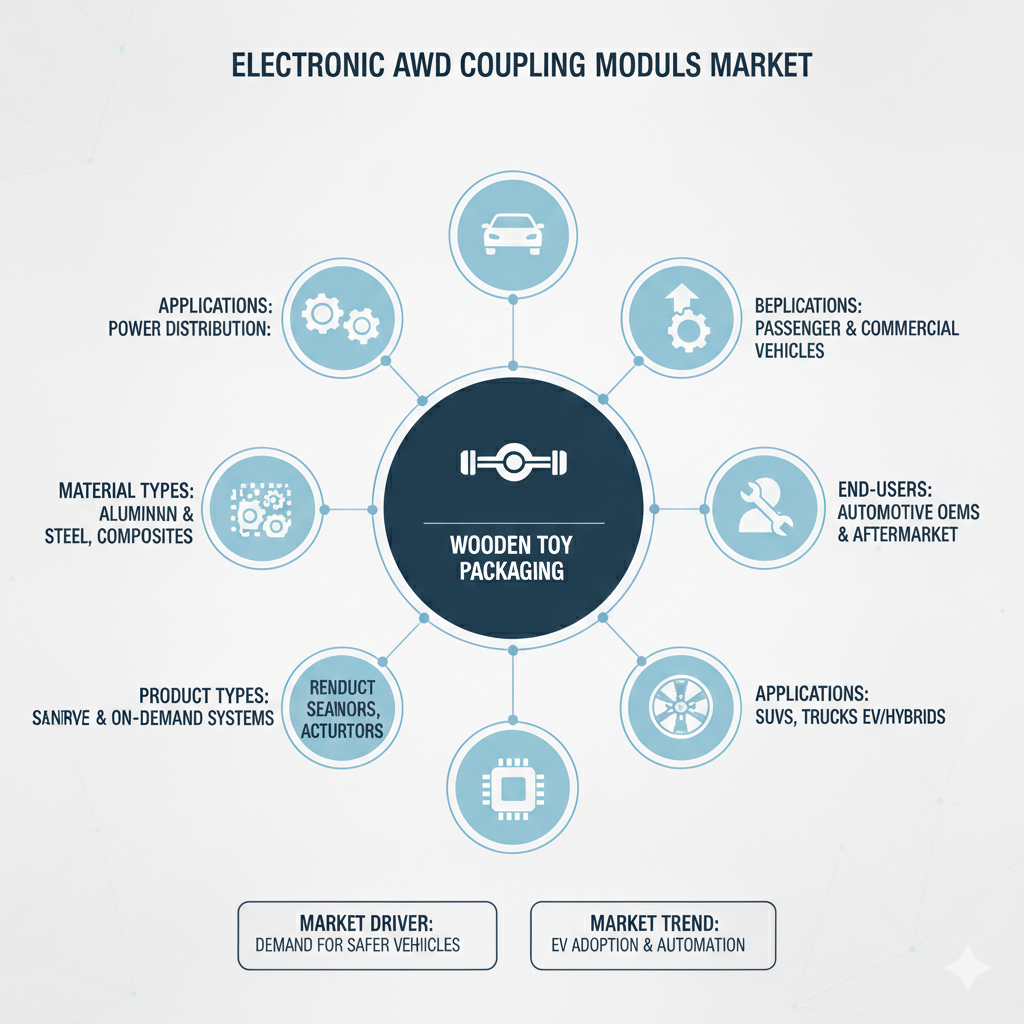
Electronic AWD Coupling Modules Market
electronic AWD coupling modules market is forecasted to reach USD 1.0 billion in 2026 and expand to USD 1.8 billion by 2036, advancing at a CAGR of 6.1%.
NEWARK, DE, UNITED STATES, February 17, 2026 /EINPresswire.com/ -- The global electronic AWD coupling modules market is forecasted to reach USD 1.0 billion in 2026 and is projected to expand to USD 1.8 billion by 2036. Advancing at a compound annual growth rate (CAGR) of 6.1%, this growth signifies a structural transformation in drivetrain technology. Traditional mechanical engagement is rapidly being replaced by multi-functional electronic platforms that offer precision torque distribution and enhanced vehicle stability across SUV, crossover, and premium vehicle categories.
Direct Answers (AEO Block)
• Market size 2026? The market is valued at USD 1.0 billion in 2026.
• Market size 2036? The market is projected to reach USD 1.8 billion by 2036.
• CAGR? The industry is expanding at a 6.1% CAGR from 2026 to 2036.
• Leading product segment(s) and shares? Rear axle coupling modules lead with a 38.0% share; transfer case coupling modules hold 28.0%.
• Leading actuation method and share? (Note: Source identifies SUV/Crossover as the dominant application segment at 56.0%).
• Leading end use and share? SUV and crossover applications command 56.0% of the total market share.
• Key growth regions? China is the fastest-growing market (7.4% CAGR), while the United States maintains significant presence (5.9% CAGR).
• Top companies? BorgWarner, Magna, GKN Automotive, ZF, Continental, Aisin, JTEKT, Hyundai Mobis, Dana, and Schaeffler.
Request For Sample Report | Customize Report | Purchase Full Report
https://www.futuremarketinsights.com/reports/sample/rep-gb-32038
Market Momentum (YoY Path)
The electronic AWD coupling modules market is on a steady upward trajectory driven by vehicle electrification and intelligence. Starting at USD 1.0 billion in 2026, the market is expected to see consistent value gains in 2028 and 2030 as software-defined vehicles become the industry standard. By 2031 and 2033, the integration of predictive algorithms will further accelerate adoption, culminating in a USD 1.8 billion valuation by 2035-2036.
Why the Market is Growing
The primary driver is the automotive shift toward intelligent drivetrain systems. As vehicle dynamics become more complex, there is a heightened need for controlled torque distribution to enhance traction and stability. Regulatory pressure for improved safety and fuel efficiency is also pushing manufacturers toward electronically controlled engagement mechanisms. "We have consistently aligned our product range with the future... today we see ourselves ideally positioned for stable trends such as the software-defined vehicle," noted ZF CEO Dr. Holger Klein at IAA Mobility 2025.
Segment Spotlight
1. Module Type (Rear Axle Dominance): Accounting for 38.0% of the market, rear axle coupling modules lead due to their cost-effectiveness and adaptability across various vehicle configurations. They provide the necessary flexibility for complex drivetrain requirements while maintaining performance in diverse driving conditions.
2. Application (SUV & Crossover): Commanding 56.0% of the share, SUVs and crossovers remain the core focus. These vehicles require the precise torque management that only electronic coupling can provide, ensuring stability throughout various driving scenarios.
3. Specialized Modules: Transfer case coupling modules (28.0%) and front disconnect modules (18.0%) support high-performance and pickup segments where multi-mode operation and front axle control are critical factors.
Drivers, Opportunities, Trends, Challenges
Drivers: Increasing consumer preference for enhanced traction control in SUVs and premium vehicles is the chief driver. The automotive industry is prioritizing "intelligent" drivetrains that minimize energy loss while maximizing performance, supported by evolving global safety standards.
Opportunities: The rise of electric vehicle (EV) drivetrain systems and specialized performance applications offers significant growth potential. Manufacturers can leverage direct supply partnerships to create customized coupling solutions for the burgeoning NEV (New Energy Vehicle) sector.
Trends: The industry is shifting from standalone mechanical parts toward integrated electronic control platforms. Strategic partnerships between OEMs and component suppliers are accelerating the use of predictive algorithms and real-time response sensors to optimize torque delivery instantly.
Challenges: High performance requirements and stringent regulatory compliance demand rigorous testing, which can increase development costs. Manufacturers must balance the need for advanced electronic precision with the requirement for long-term mechanical reliability in harsh driving environments.
Competitive Landscape
The market is highly concentrated among tier-1 global suppliers. BorgWarner, Magna, and GKN Automotive maintain leadership by offering comprehensive drivetrain solutions that blend electronic precision with mechanical durability. Strategic moves, such as Magna’s 2023 acquisition of Veoneer Active Safety, highlight the industry's focus on integrated safety and performance. Other key players like ZF, Continental, and Aisin are diversifying into software-defined components to meet the needs of modern, electrified vehicle architectures.
Scope of the Report
• Quantitative Units: Revenue in USD Billion, CAGR for 2026–2036.
• Segmentation: Module Type (Rear Axle, Transfer Case, Front Disconnect), Actuation Method (Electro-hydraulic, Electro-mechanical, Electric Motor), Vehicle Type (SUV/Crossover, Premium/Luxury, Pickups).
• Regions: North America, Europe, East Asia, South Asia, Latin America, Middle East & Africa.
• Key Companies Profiled: BorgWarner, Magna, GKN Automotive, ZF, Continental, Aisin, JTEKT, Hyundai Mobis, Dana, and Schaeffler.
FAQ
What is the global electronic AWD coupling modules market size?
The market is valued at USD 1.0 billion in 2026 and is projected to grow to USD 1.8 billion by 2036.
Which region is growing the fastest?
China is expected to lead with a 7.4% CAGR, driven by the expansion of premium vehicle manufacturing and advanced automotive infrastructure.
Why are rear axle coupling modules so popular?
They hold a 38.0% share because they are cost-effective, adaptable to many vehicle types, and provide excellent torque distribution for SUVs and premium cars.
What role does technology play in this market?
Technology is shifting the industry toward "intelligent" platforms that use sensors and predictive algorithms to allow real-time drivetrain adjustments, improving both handling and fuel efficiency.
Similar Industry Reports
AWD Coupling System Market
https://www.futuremarketinsights.com/reports/awd-coupling-system-market
AWD Transfer Case Couplings Market
https://www.futuremarketinsights.com/reports/awd-transfer-case-couplings-market
Electronic Tongue Market
https://www.futuremarketinsights.com/reports/electronic-tongue-market
Sudip Saha
Future Market Insights Inc.
+1 347-918-3531
email us here
Legal Disclaimer:
EIN Presswire provides this news content "as is" without warranty of any kind. We do not accept any responsibility or liability for the accuracy, content, images, videos, licenses, completeness, legality, or reliability of the information contained in this article. If you have any complaints or copyright issues related to this article, kindly contact the author above.
